Bringing Wildlife Back Into Your Garden
Often, a new garden design project starts with a blank canvas – an empty turfed space, topsoil compacted by heavy machinery or worse, astroturf devoid of all life. What strikes me at these sites is just how quiet it is, there are no bees, insects or birds flying around. It’s no wildlife garden!
The good news? It doesn’t take much to bring it back. With a few design choices and the right planting strategy, your garden can become a sanctuary for wildlife – and still look elegant, structured, and easy to maintain.
Why Wildlife Gardens Matter in Scotland
Here in Scotland, as our climate changes and becomes more erratic, taking care of and providing a home for all insects, which in turn will support local biodiversity, is becoming more important.
A well-designed wildlife garden doesn’t just support pollinators – supporting and providing a home for all insects, in all seasons, provides a base for a thriving ecosystem right in your garden and will attract birds and small invertebrates as well as amphibians such as frogs, toads and newts.
By using a combination of native and non-native plants suitable to your unique growing conditions, we can create plant-filled spaces that thrive in the Scottish climate and growing conditions. Being climate resilient and requiring less watering, but also be beautiful with year-round interest and be low maintenance.
At MUSA, we say “Designing with nature, not against it, always creates better results.”
Start with Structure: Shelter and Layers
To create a successful wildlife garden, we need to provide the basics: food, water, and shelter. A good garden structure also helps Insects, and the birds that they will attract need somewhere to feed, hide, and nest. Think in layers:
- Trees: Native species like Birch, Rowan or crab apple provide height, food, nesting spots and fallen leaves provide a valuable hibernation spot as well as improving the soil as they break down.
- Shrubs: Hawthorn, hazel, or dogwood create dense, protective areas.
- Perennials and Ornamental grasses: I like to leave perennials and grasses over winter, by doing less and leaving them in the garden over winter as dried out stems and seed heads, you have something interesting to look at over winter and provide hibernation spaces for beneficial insects. Seed heads not only look amazing covered in a light frost, but can also provide a food source for birds during the harsh winter months.
- Ground layer: By covering the soil with groundcover plants, we are effectively creating a green mulch, protecting the soil from extremes of weather.
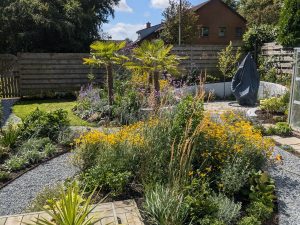
Even in small gardens, layered planting makes a huge difference. A structured design ensures it looks intentional, not overgrown – the balance of artistry and ecology we aim for in every project.
Read more about this in our Falkirk Herald article on the planting design we are doing in Falkirk Town Centre.
Water: The Heart of a Living Garden
A simple pond can attract frogs, dragonflies, and birds. In Scottish climates, as our climate becomes more erratic, even temporary pools of water can be beneficial and easy to sustain.
A few design tips:
- Avoid fish – they eat tadpoles and insect larvae, add additional nutrients to the water and can disrupt a natural balance of aquatic life.
- Use shallow edges so birds and hedgehogs can drink safely.
- Include native aquatic plants like water mint, marsh marigold, and iris to encourage aquatic insects.
If you’d prefer something more sculptural, we often integrate reflective water bowls or rills into contemporary designs – subtle and can be designed to encourage wildlife.
Plant for Pollinators – Season by Season
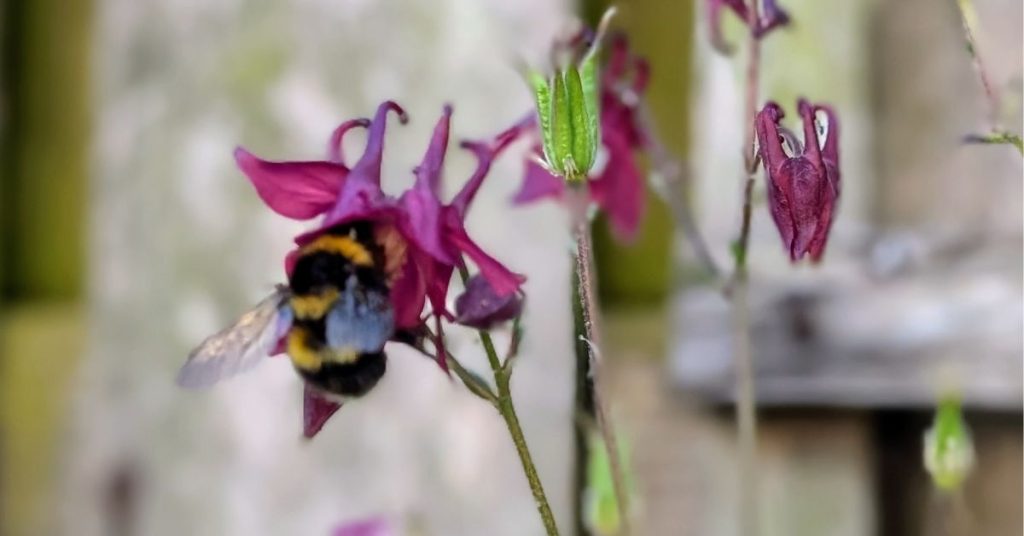
Pollinator-friendly planting isn’t just about wildflowers, non-native garden plants can be just as beneficial. A truly sustainable design keeps bees and butterflies fed from early spring to late autumn, while evergreen and winter-flowering plants support insects that do not hibernate. As our winters generally become milder, bumble bees can emerge as early as January – they need a nectar-rich flower to feed from.
Spring: Pulmonaria, Pieris, and spring-flowering bulbs such as snowdrops or crocus all provide a food source for insects when they first emerge from hibernation.
Summer: Foxgloves, alliums, salvias and lavender all attract a mix of pollinators, adding life to your garden.
Autumn: Rudbeckia, asters and sedums all provide food for insects and a last wave of colour and interest for us in our gardens.
Winter: Ivy, mahonia and Hellebores for late nectar and evergreen structure in the garden during the cooler winter months.
Choose a mix of native and ornamental plants – the trick is in the combination. A garden can be both wildlife-rich and visually stunning; the two goals complement, not compete.
For more planting advice, the RHS offers excellent guidance on pollinator-friendly species suited to Scottish conditions.
Small Changes, Big Impact
You don’t need acres to make a difference. In fact, the best wildlife gardens often emerge from thoughtful small spaces. Try:
- Try no-mow May, I did, and our native common spotted Orchid arrived in my garden.
- Swapping fences for hedges to create “wildlife corridors.” Or, try adding in hedgehog gates
- Adding bird boxes or solitary bee hotels.
- Using peat-free compost and organic mulch to feed soil life.
- Stop using chemicals in the garden, weed killers often kill more than weeds and can adversely affect your health.
These subtle shifts in your gardening all help – creating not just a garden, but an ecosystem.
Designing Great Wildlife Gardens for Beauty and Balance
A wildlife-friendly garden should still feel designed – calm, cohesive, and enjoyable year-round. That’s where a professional Garden Designer makes all the difference.
At MUSA, we create gardens that function as living canvases – spaces where insects and biodiversity are encouraged, giving you a beautiful, low-maintenance garden full of interest, year-round colour and buzzing with life.
Whether it’s a Falkirk suburban courtyard alive with bees, a Stirling family garden with a wildflower meadow, or an Edinburgh townhouse with a modern wildlife pond – the principle is the same: designing with intention, for both people and planet.
Ready to Bring Wildlife into Your Garden?
If you’d like to transform your outdoor space into a haven for wildlife – without losing its structure, style, or ease of maintenance – we’d love to help. Book a design consultation with MUSA Landscape Architecture, and let’s create a garden that truly lives.